
Israel Reopens West Bank Settlement as Tensions Rise

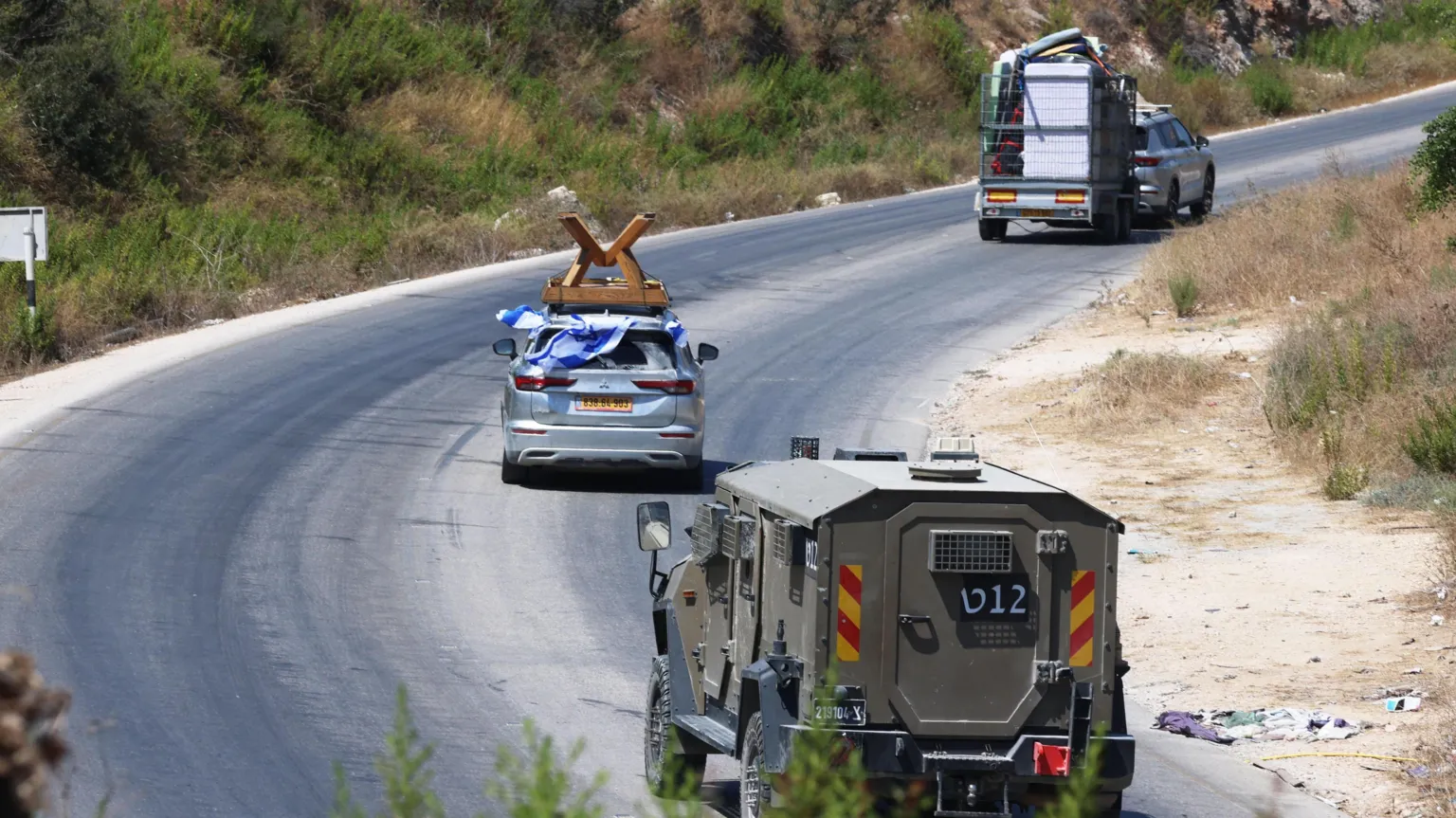
The settlers were laden with bedding, furniture and building material as they approached Kadim.
info Adjust the font size of this article to get the best reading experience.
Kadim settlement reopens two decades after its evacuation, as Israel expands settlements around Jenin despite growing international opposition.
JENIN, Occupied West Bank — Israel has reopened the Kadim settlement in the northern West Bank, two decades after it was evacuated under a previous Israeli government’s unilateral disengagement plan.
About 30 families described by Israeli authorities as “pioneer families” arrived at the site on Thursday, travelling from Tel Aviv with furniture, household supplies and construction materials.
Some vehicles were escorted by Israeli soldiers as the settlers travelled past Palestinian villages and farmland, with Israeli flags flying from their cars.

Senior Israeli politicians including Finance Minister Bezalel Smotrich and Knesset Speaker Amir Ohana attended a national ceremony.
The return follows the Israeli government’s decision to overturn a 20-year ban on Jewish settlement in parts of the northern West Bank.
The move has raised fresh concerns among Palestinians living around Jenin, where Israeli settlements and military infrastructure have expanded rapidly.
Smotrich Hails Return to Kadim
Israel’s far-right Finance Minister Bezalel Smotrich attended the ceremony marking the reopening of Kadim, describing the return as a correction of the 2005 evacuation.
“Twenty-one years after the crime of expulsion from northern Samaria, we have completed the correction and have returned to the settlement of Kadim,” Mr Smotrich said.
He used the biblical term “Samaria” for the northern part of the West Bank.
Israel’s justice minister and the speaker of the Knesset were also present, alongside Yossi Dagan, head of the regional settlers’ council.
Mr Dagan said settlers would eventually return to Gaza as well.
Kadim was established on a small hill outside Jenin. It was evacuated in 2005 together with Ganim, Sanur and Homesh as part of Israel’s unilateral disengagement plan.
At the time, the settlements were considered isolated, expensive to protect and of limited strategic value.
Kadim is now the fourth and final settlement evacuated in 2005 to be reopened.
Palestinian Residents Fear Further Displacement
The reopening has caused anxiety among Palestinian residents living near the settlement.
One Palestinian vegetable farmer, who has lived in the same family home for 53 years, said he remembered watching Kadim being built when he was a child.
He said relations between Palestinians and Israeli settlers had once been relatively peaceful.
“Back then, the settlers were living alongside us, and we coexisted peacefully. They lived their lives and we lived ours,” he said.
But he said the return of settlers had changed his sense of security.
“I’m afraid of the events spreading around us,” he said.
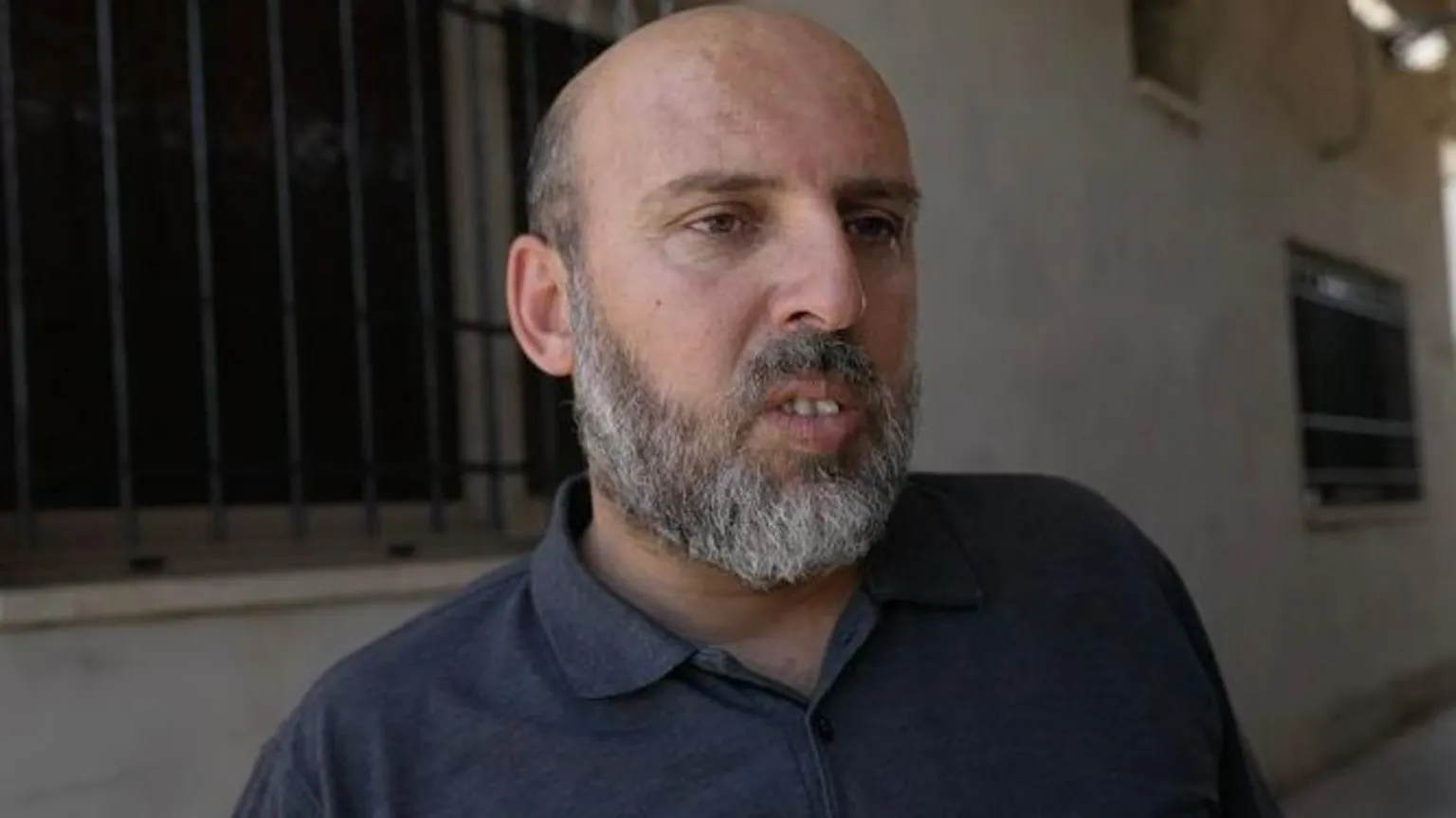
Problems began even before most of the families moved in, schoolteacher Samer Jaber told the BBC.
He also described alleged incidents involving Palestinian farmers being forced away from agricultural land.
The farmer said his family had originally fled Haifa during the 1948 Arab-Israeli war.
“There’s no more displacement left in me. We’re living with a sense of resignation. It’s a life of fear,” he said.
Settlement Expansion Accelerates
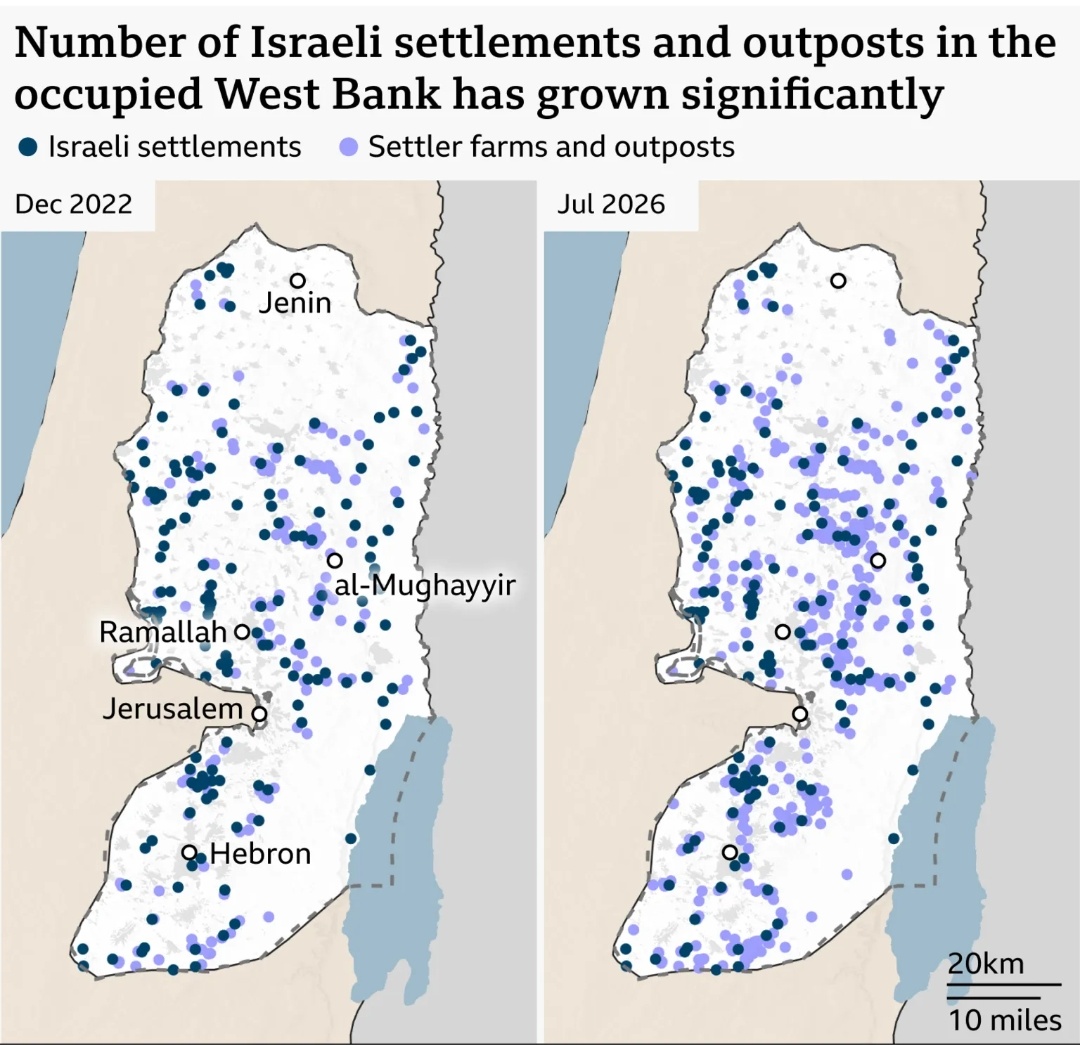
The reopening of Kadim comes amid a broader expansion of Israeli settlements across the West Bank.
Since Israel’s current government came to power in late 2022, more than 100 new settlements have reportedly been approved across the West Bank, including 19 in the northern part of the territory.
Hagit Ofran, director of the Settlement Watch programme at Peace Now, said the rapid development around Jenin was part of a wider effort to expand settlements before Israel’s next election.
Another settlement, Emek Dotan, west of Jenin, was formally opened shortly before Kadim. Nearly two dozen Jewish families are now reported to be living there.
Palestinian residents living nearby say they have faced increasing pressure as the settlement has expanded.
“Fear Dominates Everything”
Samer Jaber, a Palestinian teacher living in a small community near Emek Dotan, said he had watched the settlement develop from bulldozers clearing land to caravans being installed.
He said groups of settlers had filmed his family and entered the area around their homes.
“Groups come and stand opposite our houses, filming us,” Mr Jaber said.
He also alleged that people had used powerful floodlights to shine into Palestinian homes during the night.
“Fear dominates everything. We are completely defenceless,” he said.
Mr Jaber, who is partially blind and has a leg injury, said he was placing concrete blocks around his home because he feared for his children.
“I’m bringing concrete blocks to close off this side of the house because I’m afraid for my children,” he said.
New Military Infrastructure
Settlement construction is taking place alongside a rapid expansion of Israeli military infrastructure around Jenin.
Two new military bases are reportedly under construction, with concrete walls, watchtowers and barbed wire surrounding the sites.
Another military outpost is being built on Palestinian land near Jenin Refugee Camp.
The Israeli military confirmed that the construction had been ordered “in accordance with operational needs.”
Kamal Abu al-Rub, the Palestinian Authority governor of Jenin, said the seizure of land around the refugee camp raised concerns that the area could eventually be reshaped to accommodate Israeli settlers.
He described the previous two decades without Israeli settlements around Jenin as a period of relative calm.
“Now, we live in the hell orchestrated by them and their assaults,” he said.
He accused Israeli forces and settlers of restricting Palestinian movement, cutting roads, bulldozing land and destroying trees.
International Pressure Fails to Halt Expansion
The expansion is taking place despite sustained international opposition.
Israeli settlements in the occupied West Bank are widely regarded as illegal under international law. Settlement outposts are also illegal under Israeli law, although some receive state services or funding.
For Palestinians living around Jenin, the changes are increasingly visible.
Roadside Palestinian businesses near Kadim have been demolished, leaving sections of the road surrounded by rubble.
The growing number of settler caravans, military installations and demolished Palestinian buildings is transforming the landscape around Jenin.
The reopening of Kadim therefore represents more than the return of a single settlement.
It signals a broader effort by Israel’s current government to deepen its presence in the northern West Bank — a development that Palestinians fear could further restrict their movement, access to farmland and control over the territory.
With Israel’s next election approaching, the expansion of settlements is likely to remain one of the most contentious issues in the country’s politics and in its increasingly strained relationship with the Palestinians.
Source: Lucy Williamson, Middle East Correspondent , Jenin (BBC)
Editor – Team
















At the moment there is no comment