
Nuclear Revival, Forgotten Reactor Gets a Second Chance in AI Power Race

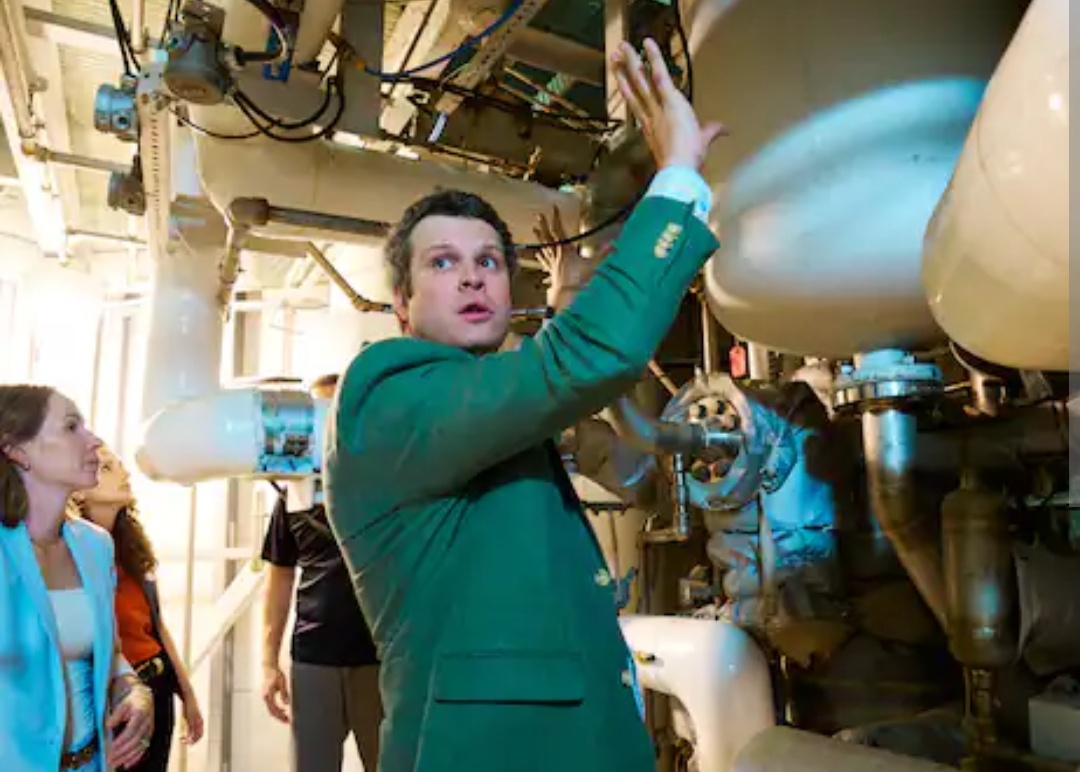
Erik Nygaard with BWXT shows off a nuclear test facility in Lynchburg, Virginia, this month. (Photos by Jonathan Mehring/For The Washington Post)
info Adjust the font size of this article to get the best reading experience.
A dormant $400 million small-reactor project in Virginia is being revived as engineers race to develop reliable power for the booming U.S. data-center industry.
LYNCHBURG, Va. — A nuclear project once written off as an expensive relic of a different energy era is getting a second look as the artificial intelligence boom creates an urgent demand for electricity across the United States.
Inside a sprawling engineering facility in the hills outside Lynchburg stands a 120-foot-tall structure designed to replicate a nuclear power plant. The facility, developed at a cost of roughly $400 million, was built to test a smaller reactor concept known as mPower.
For nearly a decade, the project sat largely dormant.
Now, the rapid expansion of AI and data centers has revived interest in the technology. A new generation of engineers, including veterans of SpaceX, believes the abandoned project could provide a shortcut toward a long-promised class of smaller nuclear reactors capable of delivering steady, low-carbon electricity.
The effort brings together BWXT, a longtime American nuclear company with decades of experience building reactors for the U.S. Navy, and Applied Atomics, a young nuclear start-up founded by engineers with backgrounds at SpaceX.
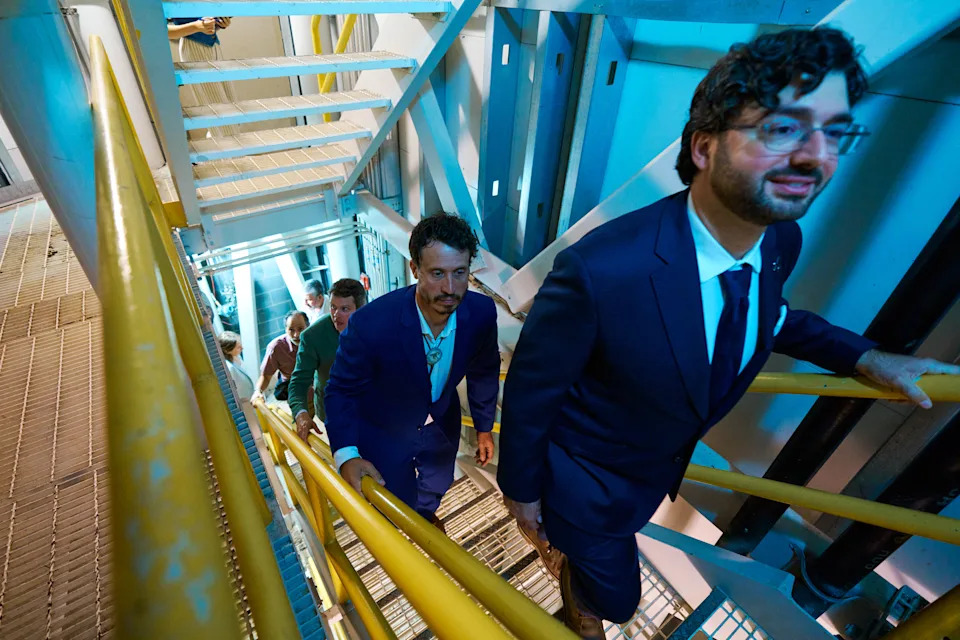
A staircase inside the nuclear test facility.
Ben Kellie, a co-founder of Applied Atomics and a former SpaceX engineer, said the company sees the existing facility as an advantage rather than a liability.
“We’re standing on the shoulders of giants here, right?” Kellie said. “We’re starting with something that had $400 million in investment put into it, and significant time and effort. That’s a leg up.”
A Nuclear Idea That Arrived Too Early
The mPower project was conceived during an earlier attempt to commercialize small nuclear reactors. Its basic technology is familiar: a light-water reactor uses nuclear fission to generate heat, produce steam and drive a turbine that generates electricity.
The difference is scale.
Instead of relying on enormous conventional nuclear plants, mPower was designed around a smaller reactor that could potentially be deployed in groups and built with greater flexibility.
The original project, however, ran into a changing energy market.
The shale-gas boom pushed U.S. natural-gas prices sharply lower, making it difficult for a new nuclear technology to compete economically. At the same time, the 2011 Fukushima disaster in Japan intensified public and regulatory concerns surrounding nuclear power.
By 2017, BWXT had abandoned the project.
Erik Nygaard, BWXT’s vice president of micronuclear reactor products, said the economics had fundamentally changed.
“The economics started falling from underneath us,” Nygaard said. “Basically, we just didn’t have any customers. And no customers means we shouldn’t keep spending on product development.”
Nearly a decade later, the energy equation looks markedly different.
AI Changes the Nuclear Equation
The explosive growth of artificial intelligence has transformed electricity demand from a long-term infrastructure concern into an immediate challenge.
Data centers require enormous quantities of reliable electricity to run advanced computing systems. Unlike intermittent renewable sources, nuclear plants can generate power continuously, making them increasingly attractive to technology companies seeking dependable electricity with relatively low carbon emissions.
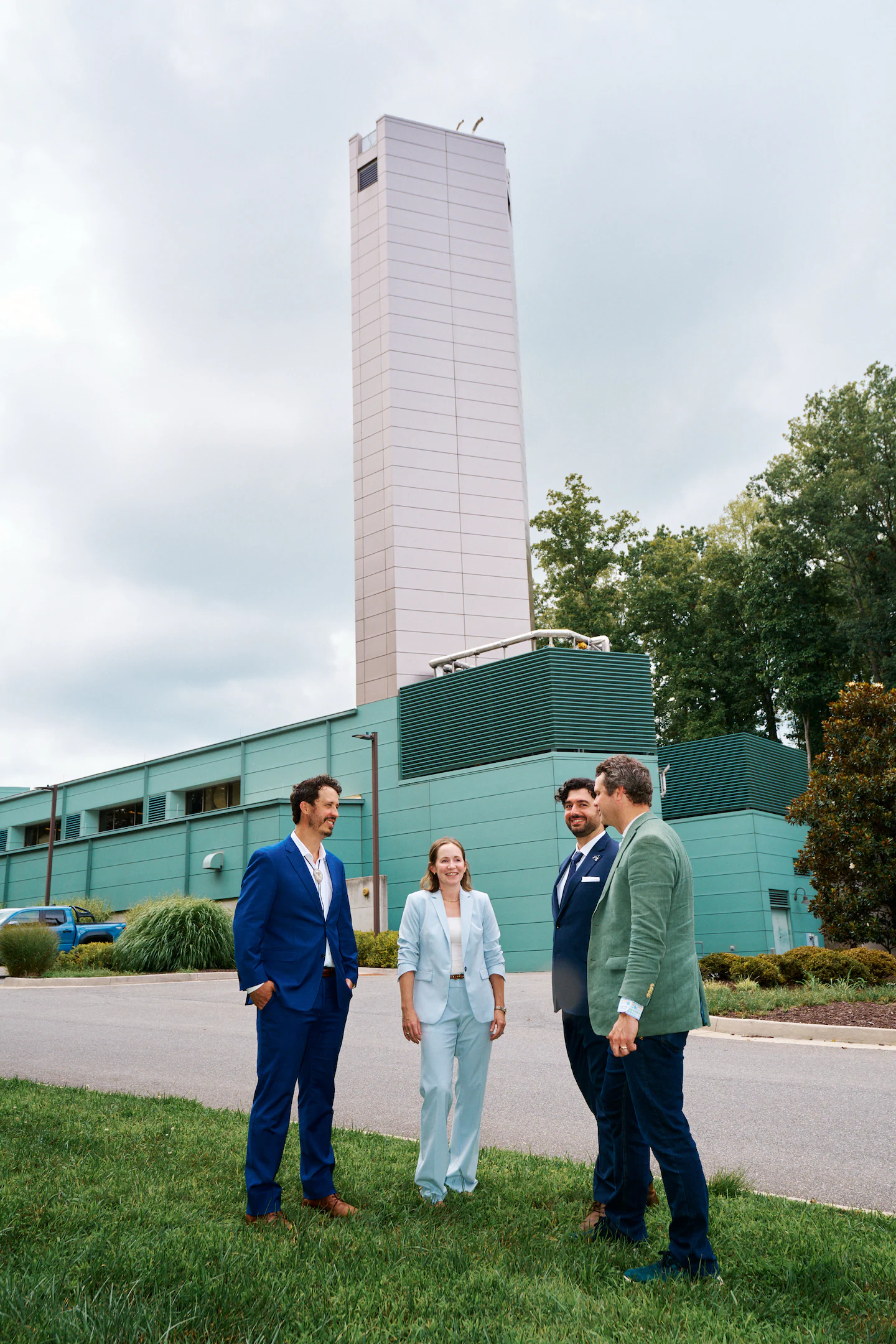
From left, Ben Kellie, Kate Kelly, Paul Keutelian and Erik Nygaard in front of the facility.
Kate Kelly, president of BWXT Advanced Technologies, said the market surrounding nuclear power has changed dramatically.
“The landscape looks very different today,” Kelly said.
That shift has prompted investors, utilities and technology companies to reconsider nuclear projects that once appeared economically impractical.
Applied Atomics is betting that mPower can benefit from that renewed appetite without attempting to reinvent the reactor itself.
The company’s approach differs from a number of advanced nuclear ventures pursuing reactors based on different coolants, fuels and operating temperatures.
Instead, Applied Atomics is leaning on the established light-water reactor model already used throughout the U.S. nuclear fleet.
A Smaller Reactor With a Big Ambition
Applied Atomics hopes its first commercial mPower reactor could generate approximately 195 megawatts of electricity.
That is roughly enough electricity to serve the equivalent of 155,000 homes, according to the company.
The reactor could also be deployed in groups, potentially allowing customers to install several units at a single industrial site.
For data-center developers, that flexibility could be particularly valuable.
Rather than waiting for a massive nuclear plant to be constructed, customers could potentially deploy smaller units in stages as electricity demand increases.
But the timetable remains ambitious. Even under favorable conditions, the first commercial reactor is not expected to operate for roughly another five years.
The Floating Nuclear Option
The project could also take a more unusual direction: offshore.
Applied Atomics and BWXT are working with Core Power, a company developing concepts for floating nuclear power plants.
The idea is to manufacture standardized nuclear plants at a centralized shipyard and deploy them offshore, where they could supply electricity to a coastal grid or energy-intensive industrial facilities.
Mikal Boe, chief executive of Core Power, said utilities have already expressed interest.
“We have great interest from utilities in the U.S.,” Boe said. “Several are engaging with us on where they could put this.”
Supporters argue that standardized offshore construction could reduce some of the complexities associated with building nuclear facilities at individual locations.
The concept also has historical roots. The original mPower effort grew out of technology developed by Babcock & Wilcox, the predecessor of BWXT, during a 1960s effort to develop nuclear-powered merchant ships.
Two such vessels operated as government-
sponsored demonstrations, but the technology ultimately failed to compete economically with conventional marine fuels.
Nygaard said the ships were technically and diplomatically successful but commercially impractical.
“It was really good as a diplomatic mission,” Nygaard said. “They sailed all over the world and did some really cool stuff. But it could never compete economically with bunker fuel.”
Nuclear’s Old Problems Remain
The renewed enthusiasm for small reactors does not eliminate the industry’s longstanding challenges.
Nuclear plants are notoriously expensive to develop and construct. Projects can face years of regulatory review, construction delays and cost overruns.
Radioactive waste remains another unresolved issue.
Small reactors still produce nuclear waste, and the United States does not have a permanent national repository for commercial nuclear waste. Communities hosting reactors therefore could face long-term responsibility for storing spent fuel and other radioactive material.
Floating reactors would introduce another layer of complexity, including the need to manage spent fuel and radioactive waste at specialized shipyards.
Those issues have left some nuclear experts deeply skeptical of the latest revival.
David Schlissel, a longtime nuclear consultant to consumer and environmental organizations, said the industry has repeatedly promised cheaper and faster nuclear technology without delivering it.
“We are now living in about the fifth supposed ‘nuclear renaissance’ in the U.S.,” Schlissel said. “The industry keeps claiming they have new designs that will be cheaper and faster to build. It keeps turning out not to be true.”
He also questioned whether investors would ultimately accept the financial risks associated with nuclear construction.
“We still can’t say for sure how much any of these reactors will ultimately cost,” Schlissel said. “And when there are major cost overruns and delays — as there always are with nuclear — who will pick up the tab?”
The SpaceX Lesson
Kellie believes nuclear power has a problem that resembles one SpaceX faced during its early years: not necessarily a lack of technical knowledge, but an inability to manufacture and deploy complex systems efficiently.
SpaceX reduced costs by simplifying processes, coordinating engineering teams and focusing on producing reliable hardware rather than repeatedly redesigning systems.
Kellie argues that the nuclear industry could apply a similar philosophy.
“We know how to split the atom,” Kellie said.
“We’ve been doing it for a very long time. We know light-water reactors are effective and safe.”
The harder question, he argues, is whether the industry can build them efficiently enough to compete in a rapidly changing energy market.
“The one place where that’s really changed has been in aerospace, which created this drop in cost of access to space by orders of magnitude,” Kellie said.
A Nuclear Bet for the AI Era
The revival of mPower reflects a broader shift in the U.S. energy landscape.
For decades, natural gas and increasingly renewable energy sources dominated new electricity investment, while nuclear projects struggled with high construction costs, regulatory hurdles and public opposition.
The AI boom has changed the urgency of the problem.
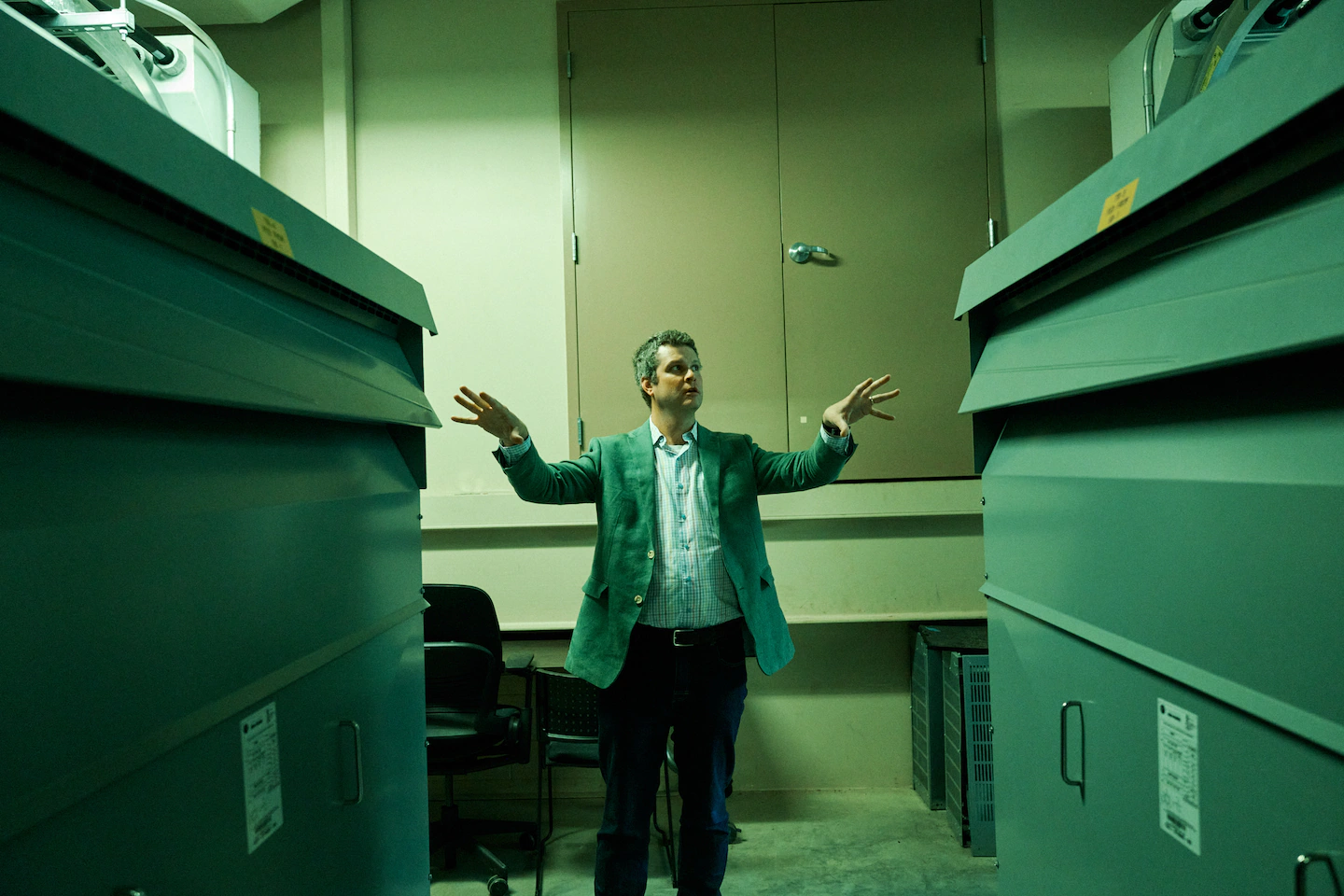
Nygaard explains how the site works.
Technology companies need enormous amounts of electricity, and utilities are confronting questions about how quickly new generation can be built.
That has created an opening for nuclear technologies once considered too expensive or too complicated to pursue.
Whether mPower can cross the gap between an experimental facility and a commercially viable reactor remains uncertain.
But for the engineers standing inside the long-dormant Lynchburg facility, the abandoned project represents something more than a failed experiment.
It is a second chance.
And this time, the market may be asking for exactly what the technology was designed to provide: reliable power, delivered at scale, in an era when electricity has become one of the most valuable resources in the AI economy.
Source: Evan Halper, Staff Writer





















At the moment there is no comment