
Wave of Sexual Assault Cases Against Foreign Tourists Exposes Gaps in Bali’s Tourism Security

info Adjust the font size of this article to get the best reading experience.
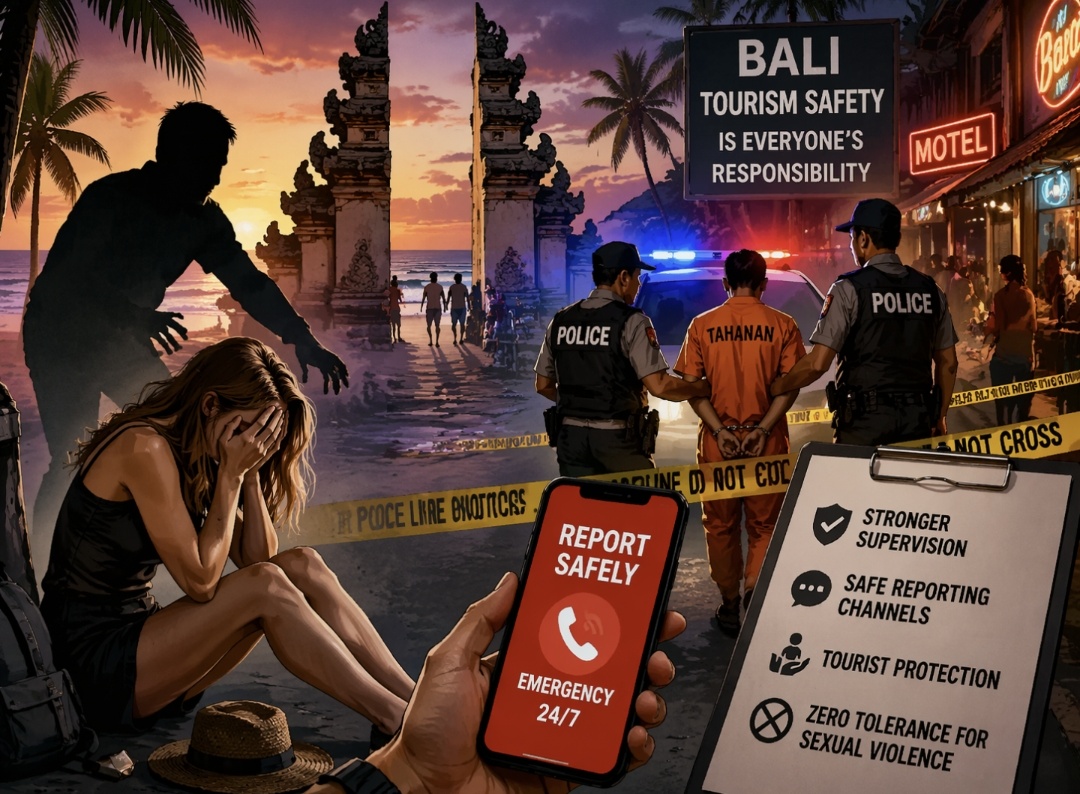
BALI, April 8, 2026 — A series of sexual violence cases involving foreign tourists in Bali over the past few days has sparked serious concerns about safety in one of the world’s leading travel destinations. At least three foreign nationals have reportedly become victims of alleged rape and sexual harassment in major tourist areas, including Canggu, Seminyak, and Kuta.
According to police information, the incidents occurred within a short period and involved victims from China and Australia. Authorities have arrested several suspects, and legal proceedings are currently ongoing. However, concerns remain over whether the arrest of perpetrators alone is sufficient, given the broader implications of serious human rights violations.
One of the cases that drew public attention involved a motorcycle taxi driver who allegedly raped a Chinese tourist after picking her up from a nightlife venue. The suspect was quickly apprehended. In another case, a security officer at a tourist accommodation is suspected of sexually harassing a foreign guest.
These incidents point to a troubling pattern. Several victims were reportedly in vulnerable conditions—such as exhaustion or under the influence of alcohol—when targeted. This raises critical questions about the effectiveness of preventive systems and supervision in key tourism zones.
Policy and Oversight Under Scrutiny
The cases present a major test for Bali’s tourism policy, which has long emphasized quality and cultural values. Critics argue that development strategies have focused more on increasing visitor numbers and promotion, while systems to ensure tourist protection remain insufficient.
Advocates for women and children’s protection have also stressed that government efforts must go beyond ceremonial programs and address root causes. Strengthening gender mainstreaming policies, community empowerment, and case handling mechanisms down to the village level are seen as crucial.
Areas with intense nightlife activity are increasingly identified as high-risk zones that require stricter monitoring and stronger security measures.
Renewed Criticism Emerges
The situation has also revived previous criticism from Megawati Soekarnoputri, who had earlier highlighted social issues in Bali, including drug abuse and prostitution. In the current context, sexual violence cases are seen as reinforcing the urgency for comprehensive reform in the tourism sector.
Calls for Comprehensive Evaluation
1. Observers and stakeholders are calling for immediate and systemic action, including:
2. A comprehensive audit of tourism policies
3. Stricter licensing and supervision of nightlife venues
4. Strengthening risk-based security systems
5. Providing safe, victim-centered reporting channels
Experts emphasize that this issue should no longer be treated merely as a matter of image, but as a fundamental concern involving human safety and rights—especially for women and children.
Potential Impact on Global Reputation
The recent cases have begun to draw international attention. Several reports indicate that foreign authorities are advising their citizens to exercise greater caution when traveling to Bali.
If not addressed decisively, the situation could undermine global confidence in Bali as a safe destination. The impact could extend beyond reputation, affecting the tourism sector that serves as a key pillar of the island’s economy.
In response, local authorities are being urged not only to act reactively but to implement comprehensive reforms to ensure safety, accountability, and stronger human rights protection in a world-class tourism destination.
“Quoted from Gatra Dewata media”




















At the moment there is no comment