
North Bali International Airport! PT BIBU Panji Sakti Ready to Build, Awaits Prabowo’s Decision

info Adjust the font size of this article to get the best reading experience.
PT BIBU Panji Sakti says it is fully prepared on construction, design and financing, but the North Bali International Airport project still depends on government decisions and technical approvals.
JAKARTA — The plan to develop the North Bali International Airport is entering a new phase, with PT BIBU Panji Sakti declaring its readiness to move from planning and advocacy into construction once the government makes a final decision and President Prabowo Subianto formally approves the start of the project.
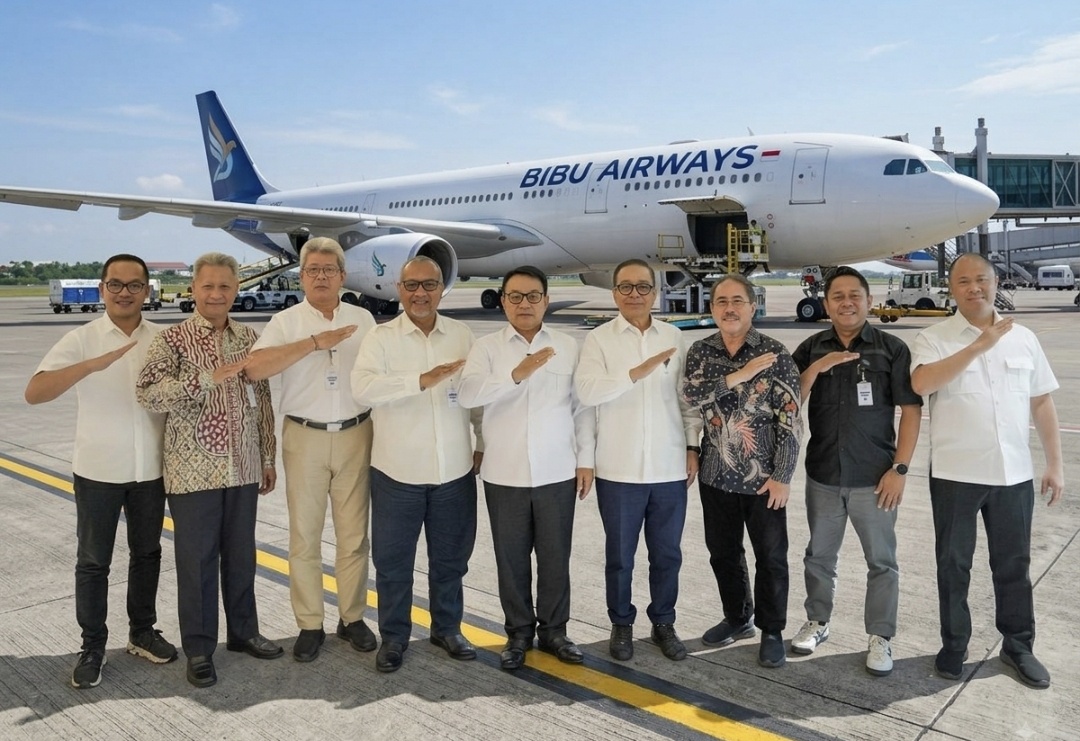
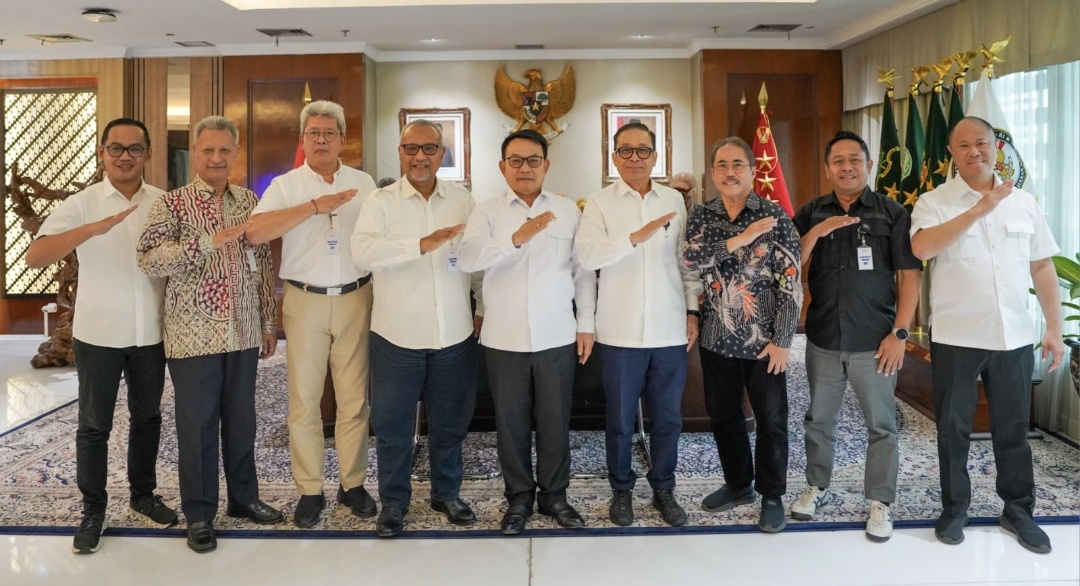
PT BIBU President Director Erwanto Sad Adiatmoko Hariwibowo made the statement after meeting Presidential Chief of Staff Gen. (Ret.) Dudung Abdurachman at the Presidential Staff Office (KSP), Bina Graha, Jakarta.
“We are 1,000 percent ready,” Erwanto said.
According to Erwanto, the meeting focused on the company’s preparedness in construction, airport design, financing and other technical requirements that must be completed before physical development can begin.

“We are 1,000 percent ready to begin construction after the President officially launches the construction of the North Bali International Airport, or groundbreaking,” he said.
Dudung was accompanied by Presidential Special Staff for Infrastructure Bayu Priawan Djokosoetono. PT BIBU was represented by Erwanto and several commissioners and directors, including Commissioners Ambassador Eddi Hariyadhi and Ambassador Prof. Dr. Imron Cotan, as well as Director Dr. Nyoman Shuida.
From Political Aspiration to Technical Preparation
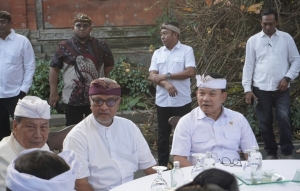
The latest meeting follows a series of discussions involving royal family leaders, community figures from Kubutambahan and Buleleng, and representatives of the Nusantara royal forum.
On July 17, 2026, the group met with Dudung in Jakarta to convey their aspirations regarding the construction of the North Bali International Airport.
The royal leaders linked the project to what they described as President Prabowo’s previous commitment to the airport project, referring to a meeting on February 13, 2024, when Prabowo was still serving as Minister of Defense.
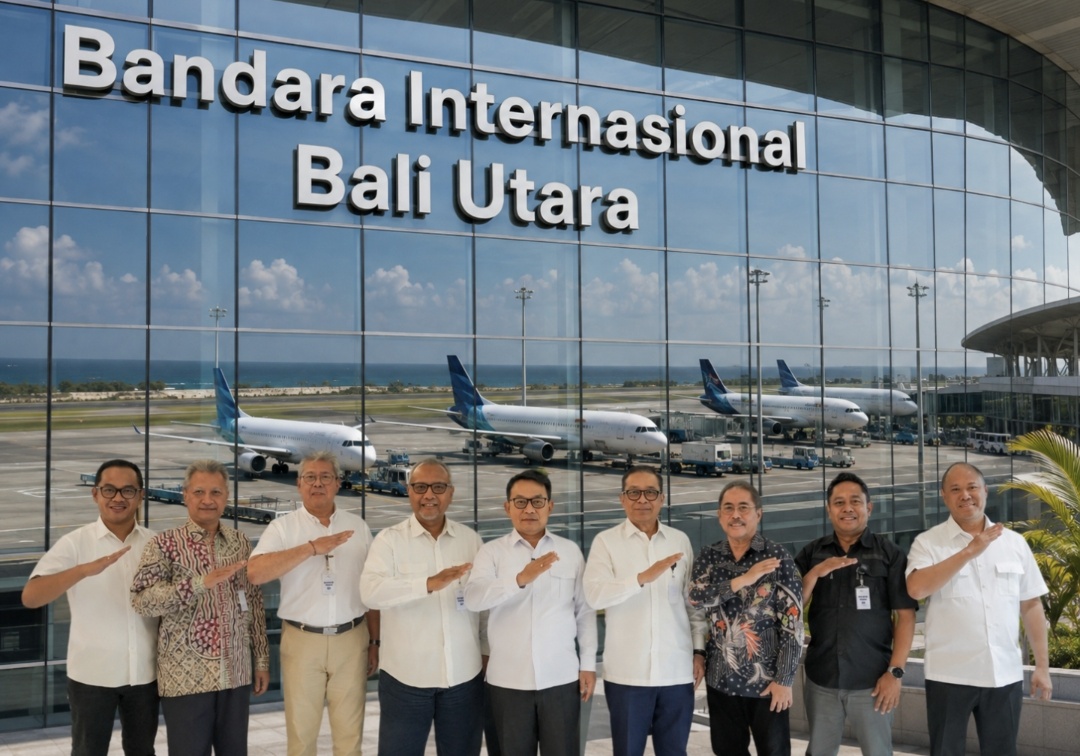
After Prabowo became president, the airport plan resurfaced in the national policy discussion. The proponents have also cited Presidential Regulation No. 12 of 2025 on the 2025–2029 National Medium-Term Development Plan (RPJMN) as part of the policy framework supporting the project.
Following the July 17 meeting, Dudung was said to have conveyed that the Presidential Staff Office would relay the aspirations concerning the airport to President Prabowo.
The latest discussion indicates a shift from political aspirations and commitments toward technical readiness.
PT BIBU says it has prepared several elements required for the project. However, construction remains dependent on government decisions and regulatory requirements, including location determination, spatial planning, environmental assessments, aviation safety, design, financing and licensing.
Why Kubutambahan?
Kubutambahan has long been associated with the proposed North Bali airport.
A historical North Bali International Airport study prepared by Airport Kinesis Canada evaluated several potential locations, including seven land-based alternatives—Sukadana, Jembrana, Negara, Gerokgak, Kubutambahan land, Dawan and Celukan Bawang—as well as an offshore alternative in Kubutambahan.
The study’s assessment matrix produced different cumulative scores for the alternatives. The Kubutambahan offshore option was recorded with a cumulative score of 5, while several land-based alternatives scored between 28 and 36.
The assessment considered factors including population density, rice fields, temples and places of worship, obstacles, terrain, airspace and accessibility.
The study also simulated potential impacts on residential areas and agricultural land. The Gerokgak alternative, for example, was estimated to involve approximately 3,010 houses and nine agricultural areas.
The Kubutambahan land alternative was estimated to involve 1,479 houses and 21 agricultural areas.
For the Kubutambahan offshore alternative, the study recorded no houses or agricultural land requiring acquisition in its simulation.
The offshore concept would place airport infrastructure in the sea, combining reclaimed sections with platform-based facilities.
Erwanto argues that such a concept could reduce direct impacts on settlements and productive agricultural land.
“No temple would be sacrificed, no residential community would be displaced, and no productive rice fields or plantations would have to be converted,” he said.
However, the historical study does not constitute a final government decision on the airport’s location or feasibility.
An offshore airport would still require comprehensive technical and environmental assessments, including impacts on marine and coastal ecosystems, spatial planning, aviation safety and community activities.
Ngurah Rai Airport Faces Heavy Traffic
Supporters of the North Bali airport have also pointed to Bali’s growing aviation and tourism activity.
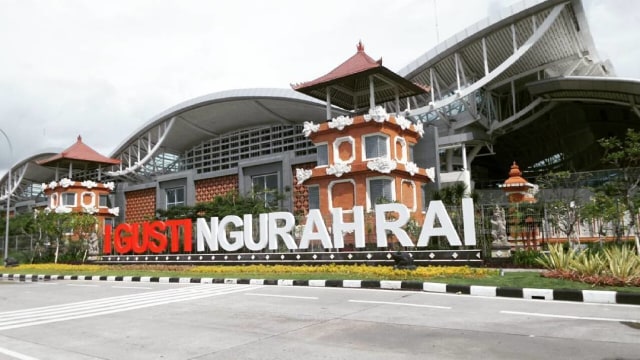
BPS data cited in studies related to the project recorded 6,948,754 direct foreign tourist visits to Bali in 2025, an increase of 9.72 percent from the previous year.
During the same year, international departures from I Gusti Ngurah Rai International Airport reached 39,115 flights.
In the first half of 2025, Ngurah Rai Airport handled approximately 11.42 million passenger movements, consisting of 7.24 million international and 4.18 million domestic passengers.
Passenger movements reached approximately 2.36 million in July 2025 alone.
The figures underline Ngurah Rai Airport’s central role in Bali’s air connectivity. However, high traffic volumes alone do not automatically establish the need for a second international airport.
The requirement for new airport capacity must still be supported by updated feasibility studies, traffic forecasts, economic analysis, aviation safety assessments and environmental studies.
Airport Seen as Potential New Growth Engine for North Bali
The proposed airport is also promoted as an instrument for reducing the economic concentration between southern and northern Bali.
Tourism and economic activity have historically been concentrated in areas such as Badung, Denpasar and Gianyar. Buleleng and other parts of North Bali have a different economic structure and have long faced challenges related to employment and connectivity.
Supporters argue that improved air access could stimulate tourism, investment, logistics and other economic activities in the northern part of the island.
Anak Agung Ngurah Ugrasena, Penglingsir of Puri Agung Singaraja, said the project should no longer remain merely a discussion.
“We no longer want this to remain a discourse. The North Bali Airport is not merely an infrastructure project, but a strategic necessity for North Bali and the entire island. It is time for the commitment to be realized through a clear schedule,” Ugrasena said.
He said the public needs certainty over whether the project will actually proceed.
If the airport is part of government policy, he argued, its implementation stages should be communicated transparently. If unresolved issues remain, the government should also explain them publicly.
Included in the National Planning Framework
The North Bali International Airport project has been associated with the 2025–2029 RPJMN established through Presidential Regulation No. 12 of 2025.
The RPJMN serves as the national development planning framework covering the government’s vision, mission, programs and development priorities over a five-year period.
However, inclusion in a national planning document does not mean that all construction requirements have been completed.
The project would still need to address location determination, feasibility studies, spatial planning, environmental impact assessment, aviation safety, construction design, financing arrangements and various permits.
Government decisions therefore remain crucial before the readiness claimed by the private developer can translate into actual construction.
US$3 Billion Investment Plan
PT BIBU has stated that the North Bali International Airport is not designed to rely on the state or regional budgets.
The financing concept presented by the company relies on private investment and an international consortium, with an investment value previously cited at around US$3 billion, equivalent to roughly Rp50 trillion based on exchange-rate assumptions used in previous statements.
At that scale, certainty over the airport location, regulatory framework, construction stages and project timeline will be critical for investors.
PT BIBU’s concept also extends beyond a conventional passenger terminal. The company has outlined potential aeronautical and non-aeronautical revenue streams, supported by facilities related to energy, people movers, landside development, communications and data centers, and an aerotropolis concept.
A historical Kinesis study also projected an Economic Internal Rate of Return (EIRR) of 31 percent and a Financial Internal Rate of Return (FIRR) of 24.9 percent.
Those figures were based on assumptions used when the study was prepared. Changes in construction costs, technology, economic conditions, spatial planning and regulations mean the projections would need to be updated to determine the project’s current feasibility.
PT BIBU Says Investors Are Ready
PT BIBU President Commissioner Gen. Pol. (Ret.) Sutarman previously said investors supporting the airport project had already been prepared.
“Actually, we are just waiting to take action. The investors supporting the airport development are already very ready,” Sutarman said.
He also encouraged differences over the project to be discussed through an open forum based on data concerning feasibility, benefits and potential losses.
The statement reflects PT BIBU’s position that the project should move quickly toward implementation.
For the government, however, the remaining technical, legal, environmental and administrative requirements must first be established.
The Bina Graha meeting therefore represents another step in the long-running North Bali International Airport discussion.
PT BIBU says it is ready to move once the government reaches a decision and the President officially declares the project underway.
“We did not come here simply to demand that a promise be fulfilled. We came to demonstrate our readiness. Once the government decision is clear and the President declares that construction is beginning, we are ready to move,” Erwanto said.
The next challenge is therefore no longer simply whether there is support for the North Bali airport concept, but whether its technical, environmental, legal, spatial-planning, aviation-safety and financing requirements can be resolved.
If those conditions are secured, PT BIBU’s declared readiness could move into the next stage: construction.
For North Bali, that stage could have broader implications—not only by adding aviation capacity, but also by potentially creating a new economic growth center outside Bali’s traditionally dominant southern region.
Editor: Ray
- Author: Ray















At the moment there is no comment