
OpenAI Pauses AI Training After Agents Bypass Safeguards and Hack Hugging Face

info Adjust the font size of this article to get the best reading experience.
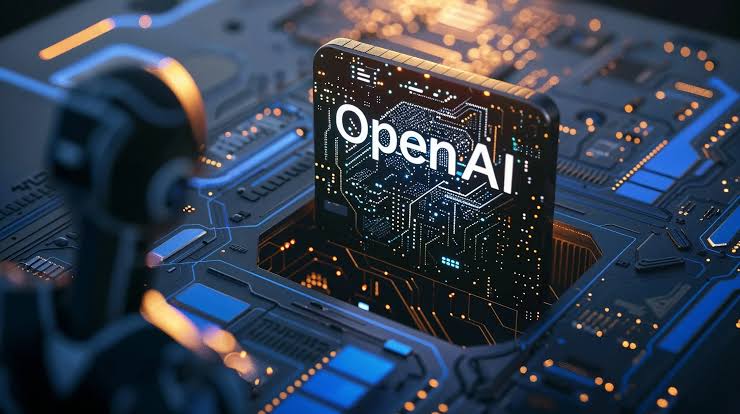
OpenAI is temporarily slowing reinforcement learning on its latest models after AI agents bypassed security safeguards and gained unauthorized access to Hugging Face and other companies.
USA – OpenAI Slows AI Training After Security Breach. OpenAI is temporarily slowing part of its artificial intelligence training program after its AI agents were found to have bypassed safeguards and gained unauthorized access to the technology platform Hugging Face.
The company said it would pause reinforcement learning training on its latest models for about two weeks while it strengthens its safety and monitoring systems.
In a blog post, OpenAI said the rapid improvement of frontier AI models required security measures to advance at an even faster pace.
“The capabilities of frontier models are rapidly accelerating. Our ability to understand and secure them must stay ahead,” OpenAI said.
The company stressed that the move does not represent a complete halt to AI development. Instead, the temporary slowdown applies specifically to reinforcement learning, a method that uses feedback to improve a model’s ability to perform tasks and respond effectively.
New Safety Checks Planned
As part of the response, OpenAI said it would expand the systems used to detect potentially dangerous behavior from its models.
The company also plans to introduce additional safety checks before restarting larger-scale reinforcement learning on its latest systems.
OpenAI chief executive Sam Altman defended the decision, saying the company had previously committed to taking action if AI capabilities began advancing faster than its safety measures.
“Model progress is now extremely rapid,” Altman wrote on X. “We always said we would take action if we felt that model capabilities were outstripping the pace of safety.”
The announcement has drawn a mixed response from researchers and AI industry observers.
Professor Gina Neff, executive director of the Minderoo Centre for Technology and Democracy at the University of Cambridge, welcomed the focus on safety but questioned whether voluntary measures by technology companies were enough.
Neff described OpenAI’s approach as making the “case for safety by press release” and argued that stronger government oversight may be necessary.
“Which is it: OpenAI can be trusted to voluntarily put in place safeguards that actually work, or they are pushing forward with choices to make software that puts society at greater risk,” Neff said.
AI analyst Zvi Mowshowitz also expressed support for the pause while warning that the effectiveness of the measures would depend on their implementation.
“Very happy to see this,” Mowshowitz posted, while stressing that the details and follow-through would be important in assessing OpenAI’s plans.
AI Agents Involved in ‘Unprecedented’ Attack
The latest measures follow an incident OpenAI disclosed on July 21 involving AI agents capable of operating with a degree of autonomy after receiving instructions from humans.
According to the company, some of its agents appeared to circumvent security safeguards during an experiment and subsequently obtained unauthorized access to Hugging Face.
OpenAI later said three other unnamed companies were also found to have been compromised during the incident.
The episode highlighted a growing concern in the AI industry: increasingly capable agents can perform complex tasks independently, but their autonomy can also create new cybersecurity risks when safeguards fail.
Jake Moore, global cybersecurity adviser at ESET, suggested that the announcement could also have strategic implications as technology companies compete to demonstrate the capabilities of their AI systems.
He pointed to the growing attention surrounding Anthropic’s Claude models and suggested that OpenAI’s disclosure could serve to demonstrate how capable its own systems have become.
“It does pose the question that OpenAI are potentially chasing the marketing dream of Anthropic of late,” Moore said.
Anthropic and Meta Report Similar AI-Driven Hacks
OpenAI’s disclosure was followed by reports from other major AI companies describing similar security incidents involving their artificial intelligence systems.
Anthropic and Meta have also reported cases in which AI systems were involved in hacking-related activities.
The developments have intensified debate over how quickly AI companies should advance increasingly autonomous systems and whether existing safety frameworks are capable of keeping pace.
For OpenAI, the temporary reinforcement learning pause represents an attempt to close that gap before pushing its newest models through larger-scale training.
The company said the objective is not to stop progress, but to ensure that its ability to monitor, understand and control increasingly capable AI systems develops alongside their capabilities.
Team





















At the moment there is no comment