Breaking News
light_mode

Grassroots Families Anchor Bali’s Cultural Preservation, Activist Urges Stronger Government Support


  • account_circle Ray
  • calendar_month Sunday, 15 Feb 2026
  • comment 0 comment
  • print Cetak

info Adjust the font size of this article to get the best reading experience.

BADUNG, Bali – The level advancement examination of Semara Duta Dance Studio, held at Pura Desa lan Puseh Padang Luwih on Sunday (February 15, 2026), was more than a routine artistic evaluation. Behind the graceful movements of 162 young dancers from Denpasar and Badung lay a broader social portrait of who truly sustains Bali’s cultural heritage.
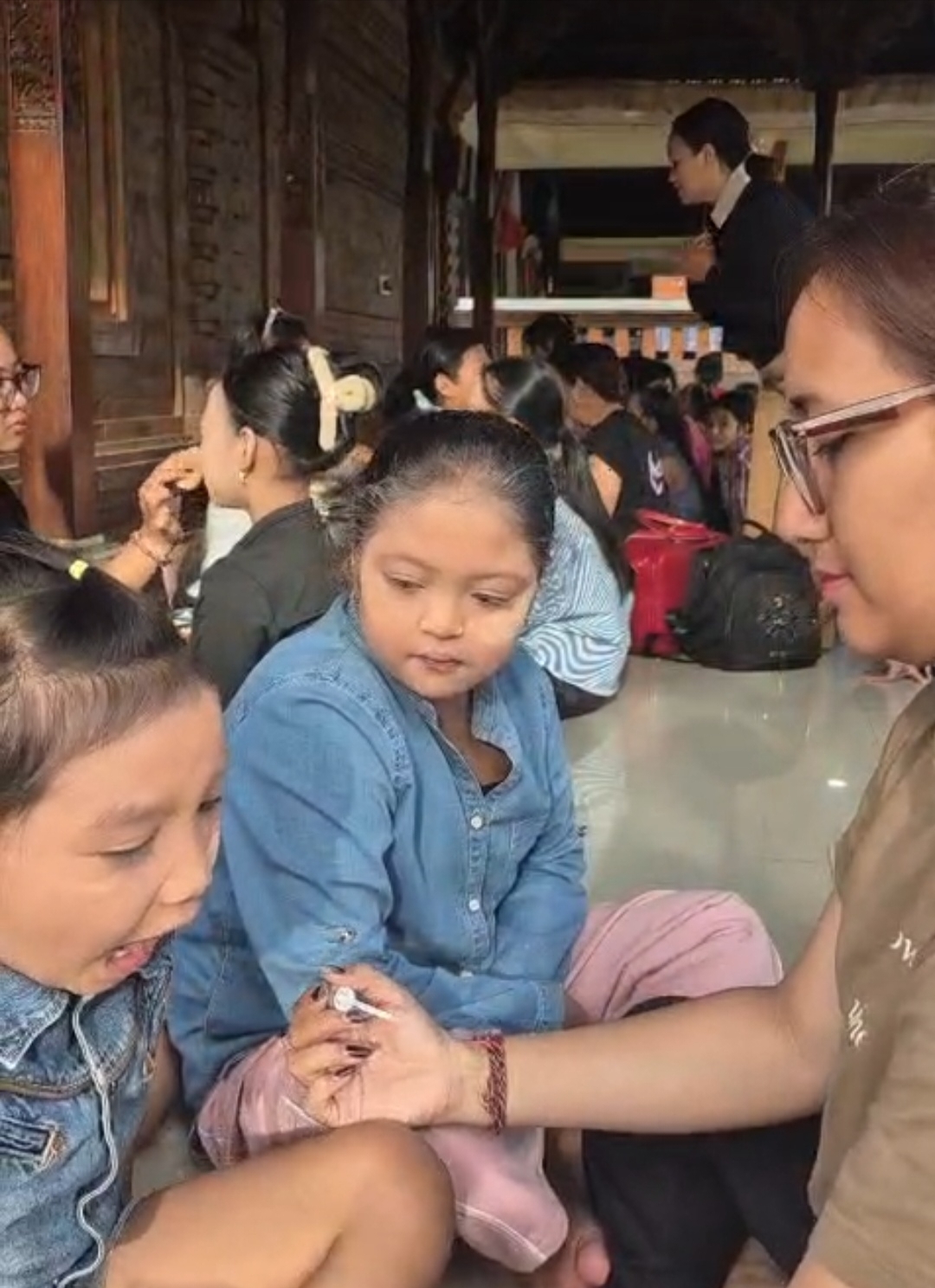
Since early morning, the temple courtyard was filled with parents accompanying their children. Rows of motorcycles lined the parking area, helmets hanging from mirrors, costume bags carried modestly by hand. There were no convoys of luxury cars. Yet within that simplicity stood a powerful commitment to keeping Balinese tradition alive.

A.A. Gede Agung Aryawan, S.T., Secretary of the NGO Arun Bali—widely known as Gung De—described the scene as a clear reflection of the grassroots social structure supporting traditional dance preservation. He noted that most participating families come from lower- to middle-income backgrounds.

“On average, it is the lower-middle communities who are the most enthusiastic about preserving Balinese culture. If possible, funding support should be directed more toward them,” Aryawan said on the sidelines of the event.

According to him, dance studios should not continue to rely solely on participant contributions. The cost of traditional Balinese costumes, accessories, and makeup for performances can be significant for families with limited income. Despite these financial pressures, parents consistently pay monthly fees and ensure their children attend rehearsals.

Aryawan contrasted the scene with other events often attended by upper-income groups. “At certain events, luxury cars are lined up. Here, the parking lot is dominated by motorcycles. That is already a clear social indicator,” he remarked.

The examination, which has been held approximately 12 times, demonstrates the studio’s sustained commitment to nurturing young talent. This year, 62 participants came from Denpasar and 100 from Badung, indicating continued interest among the younger generation in Balinese dance.

However, Aryawan stressed that long-term sustainability requires structural backing. Without regular subsidies or institutional assistance, studios risk being affected when participating families face economic hardship. Artistic activities are often the first expenses to be reduced when household finances tighten.

He urged local governments to provide concrete support, ranging from subsidies for dance instructors and costume assistance to periodic development funding. “At the very least, there should be financial support for dance teachers or semester-based assistance so the burden on the community is not too heavy,” he said.

Meanwhile, modern large-scale events with substantial sponsorship and elaborate facilities continue to flourish. While such developments are not inherently problematic, the reality that traditional arts—central to Bali’s identity—largely depend on modest-income families raises questions about policy priorities.

On the temple grounds, the children performed without awareness of the financial sacrifices made behind the scenes. Smiles and applause accompanied each appearance. Offstage, careful household budgeting ensures studio fees are paid and costumes remain presentable.

Ultimately, the Semara Duta examination was not merely a technical assessment of dance skills. It also served as a mirror reflecting disparities in support for traditional culture. If Bali is to remain steadfast as an island defined by its cultural heritage, sustained investment at the studio level is indispensable.

Among the rows of parked motorcycles and carefully prepared costumes lies a simple message: Balinese culture endures because of the resilience of its people. The public now awaits whether policy support will rise to match that enduring spirit.

Editor: Ray

  • Author: Ray

Komentar (0)

At the moment there is no comment

Please write your comment

Your email will not be published. Fields marked with an asterisk (*) are required

Rekomendasi Untuk Anda

  • Wave of Sexual Assault Cases Against Foreign Tourists Exposes Gaps in Bali’s Tourism Security

    Wave of Sexual Assault Cases Against Foreign Tourists Exposes Gaps in Bali’s Tourism Security

    • calendar_month Wednesday, 8 Apr 2026
    • account_circle Editors
    • 0Comment

    BALI, April 8, 2026 — A series of sexual violence cases involving foreign tourists in Bali over the past few days has sparked serious concerns about safety in one of the world’s leading travel destinations. At least three foreign nationals have reportedly become victims of alleged rape and sexual harassment in major tourist areas, including […]

  • Design Transcended: When Art Meets Technology in Gadgetry

    Design Transcended: When Art Meets Technology in Gadgetry

    • calendar_month Friday, 2 Feb 2024
    • account_circle Editors
    • 0Comment

    Exploring the Tech-Savvy WondersThe delineation between digital and physical continues to blur, weaving a fabric of reality that resonates with the beats of progress. Within this exciting nexus, entrepreneurs and tech aficionados find a fertile ground to cultivate, explore, and thrive. As we navigate through the myriad of gadget-driven narratives, there are key trends and […]

  • Not Native to Indonesia, How Chili Peppers Traveled from the Americas to Become an Essential Part of Indonesian Cuisine

    Not Native to Indonesia, How Chili Peppers Traveled from the Americas to Become an Essential Part of Indonesian Cuisine

    • calendar_month Saturday, 4 Jul 2026
    • account_circle Editors
    • 0Comment

    DENPASAR – Not Native to Indonesia! How Chili Peppers Traveled from the Americas to Become an Essential Part of Indonesian Cuisine. Although chili peppers are now inseparable from Indonesian cuisine, the fiery fruit is not native to the archipelago. Historical and botanical studies show that chili peppers (Capsicum) originated in the Americas before spreading across […]

  • North Bali International Airport Mission Strengthened by Ternate Sultanate Heritage, PT BIBU Emphasizes Development Rooted in History

    North Bali International Airport Mission Strengthened by Ternate Sultanate Heritage, PT BIBU Emphasizes Development Rooted in History

    • calendar_month Friday, 10 Jul 2026
    • account_circle Ray
    • 0Comment

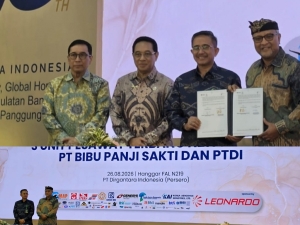
    JAKARTA – The vision behind the North Bali International Airport extends beyond the construction of a major transportation hub. For PT BIBU Panji Sakti, the project represents a national development initiative that integrates infrastructure with Indonesia’s historical legacy, cultural heritage, and civilization. That commitment was reflected during a visit by PT BIBU Panji Sakti President […]

  • The History of Fashion Design, From Haute Couture to Sustainable Innovation

    The History of Fashion Design, From Haute Couture to Sustainable Innovation

    • calendar_month Saturday, 4 Jul 2026
    • account_circle Editors
    • 0Comment

    ENGLAND – Fashion design has evolved from handcrafted garments for royalty into a global industry driven by creativity, technology, and sustainability. From the birth of haute couture in 19th-century Paris to today’s digital fashion revolution, the industry continues to shape culture, identity, and consumer trends worldwide. Charles Frederick Worth: The Father of Modern Fashion Design […]

  • Streamlining Tasks: Automation Gadgets Revolutionizing Everyday Work

    Streamlining Tasks: Automation Gadgets Revolutionizing Everyday Work

    • calendar_month Wednesday, 17 Jan 2024
    • account_circle Editors
    • 0Comment

    As the timeline of technology perpetually accelerates, 2023 emerges as a testament to human creativity and ingenuity. The realm of gadgets is no longer restricted to mere utility; it’s about amplifying human potential and redefining boundaries. With each passing day, these handheld marvels become an even more integrated part of our daily lives, intertwining with […]

expand_less