
Penglipuran and Bali’s New Tourism Path, From Sustainable to Regenerative

info Adjust the font size of this article to get the best reading experience.
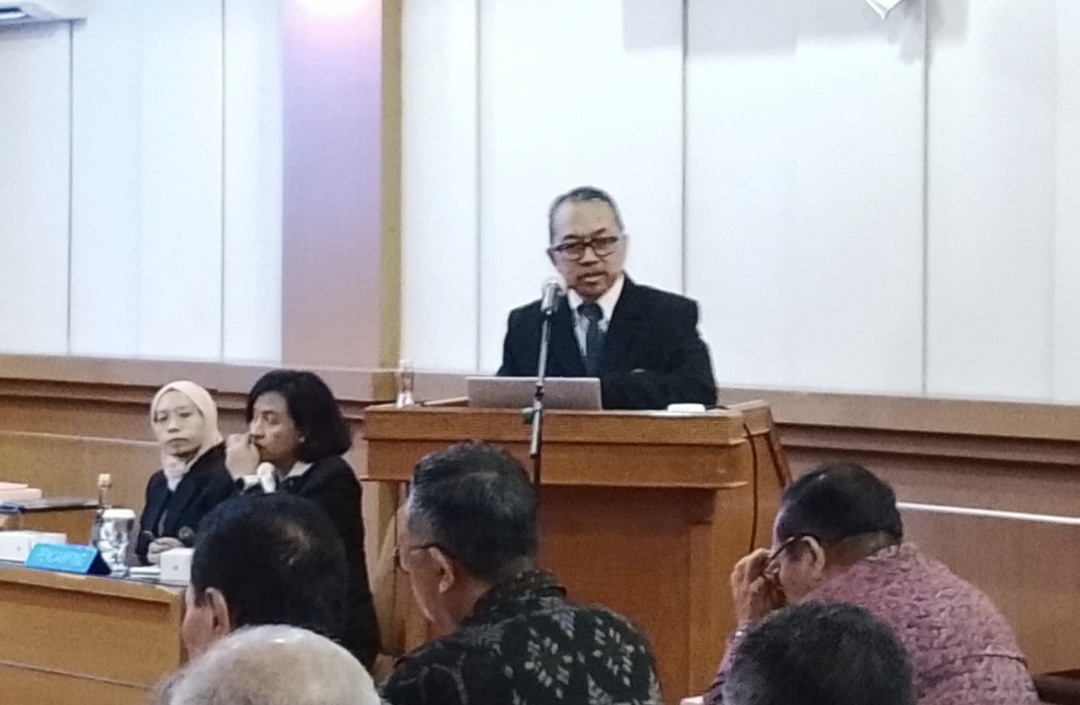
Tourism expert Dr. Trisno Nugroho says Bali must move beyond sustainability by making tourism a force to restore nature, strengthen culture and deliver greater benefits to local communities.
BALI — Bali’s tourism industry is facing a fundamental question as visitor numbers and development continue to grow: can the island welcome tourists without compromising the natural environment, cultural identity and quality of life of its communities?
The answer, according to tourism expert and former Head of Bank Indonesia Representative Office for Bali and Nusa Tenggara, Dr. Trisno Nugroho, lies in shifting the tourism paradigm from sustainable tourism toward regenerative tourism.
For decades, tourism has played a major role in Bali’s economy by creating employment, supporting local businesses, developing creative industries and introducing Balinese culture to visitors from around the world. At the same time, tourism growth has also created challenges, including waste, traffic congestion, land conversion, pressure on water resources, cultural commodification and social tensions.
“The more important question today is not simply how many tourists come, how many hotel rooms are occupied, or how much revenue is generated. The question is: does tourism make Bali better?” said Trisno.
According to him, sustainable tourism has provided an important foundation by encouraging destinations to minimize negative impacts and maintain a balance between economic, social, cultural and environmental interests.
However, regenerative tourism goes a step further.
“Sustainable tourism asks how tourism can avoid damaging a place. Regenerative tourism asks how tourism can make a place healthier, stronger and more alive,” he said.
Penglipuran as a Tourism Village Laboratory
The concept is particularly relevant to Penglipuran Tourism Village in Bangli Regency, one of Bali’s best-known tourism villages.
Penglipuran has gained international recognition for its cleanliness, traditional spatial arrangement, bamboo forest, traditional houses, customary values and strong community participation.
The village demonstrates how cultural identity and tourism can develop alongside one another. Yet, its growing popularity also creates new responsibilities.
Increasing visitor numbers can place greater pressure on public spaces, walking paths, waste-management systems and natural resources. At the same time, the bamboo forest requires continuous ecological protection, while traditional values need to be safeguarded against excessive commercialization.
For Trisno, the central issue is ensuring that the community remains the primary owner and decision-maker in determining the village’s future.
“A successful tourism village should not stop at being successful. It must continue to renew itself,” he said.
His research on Penglipuran also highlights the importance of community knowledge. Community members who understand not only the economic benefits but also the risks, responsibilities and broader meaning of tourism are more likely to participate actively in protecting and developing their village.
Community Participation Is Not Enough
Trisno emphasizes that community engagement is essential, but participation alone does not automatically guarantee environmental restoration.
Environmental protection requires measurable targets, clear management systems, continuous programs and effective governance.
Waste management, bamboo forest conservation, visitor carrying capacity, water management and ecological monitoring cannot depend solely on community goodwill.
“Environmental restoration requires structure, commitment and consistency. Good intentions must be translated into systems, programs and measurable indicators,” Trisno said.
This is where his REGENESIS Model, also referred to as the 6M Model, becomes relevant.
The REGENESIS Model
The first principle is Memulihkan, or restoring. Tourism should contribute to restoring damaged ecosystems, cultural values and social conditions rather than merely preventing further damage.
The second is Menjaga Daya Dukung Tempat, or protecting the carrying capacity of a destination. Every village, forest, beach, heritage area and community has limits. Tourism development must respect the capacity of water resources, waste systems, infrastructure, public spaces, culture and local communities.
The third is Memberi Manfaat Lebih Besar, or generating greater positive benefits. Tourism should provide benefits that outweigh the burdens it creates, with tourism revenue contributing to local communities, cultural preservation, environmental protection and destination improvement.
The fourth is Menguatkan Budaya dan Masyarakat, or strengthening culture and communities. Balinese culture should not merely become a tourism commodity or performance. Traditional architecture, rituals, arts, language, cuisine, customary values and the philosophy of Tri Hita Karana should become stronger through tourism.
The fifth is Menyatukan Para Pihak, or bringing stakeholders together. Regenerative tourism requires cooperation among traditional villages, government, tourism businesses, academics, communities, young people, destination managers and visitors.
The sixth is Membangun Sistem yang Terus Belajar, or building a continuous learning system.
Destinations need to regularly evaluate whether tourism is producing meaningful improvements. Questions should include how much waste is generated, whether local communities receive sufficient benefits, whether visitors understand local values, whether environmental conditions are improving and whether economic benefits are distributed fairly.
Without data and evaluation, tourism risks becoming trapped in a cycle of promotion, visitor growth and short-term economic targets.
One Model Cannot Fit Every Village
Trisno stresses that the lessons from Penglipuran should not be copied mechanically by other tourism villages.
Different destinations face different challenges.
In coastal villages, regenerative tourism could focus on beach restoration, coral-reef conservation, marine-waste reduction and strengthening fishermen’s livelihoods.
In agricultural villages, the priorities could include protecting rice fields, water sources, local seeds and the welfare and dignity of farmers.
Cultural villages could focus on strengthening traditional rituals, architecture, arts, language and youth participation, while urban heritage areas could prioritize historic buildings, public spaces, small businesses and local communities.
“The model may be different from one village to another, but the fundamental principle is the same: tourism should make the place better, not simply make the destination more popular,” Trisno said.
Bali Must Move Beyond Visitor Numbers
For Bali, the shift toward regenerative tourism is increasingly important.
Being a world-famous destination, Trisno argues, should not be the final measure of success. Bali must remain a living cultural landscape, a home for its people and an island where environmental protection is treated as a long-term responsibility.
“The future of Bali tourism should not be measured only by the number of visitors. It should also be measured by stronger traditional villages, healthier environments, more prosperous local communities, more responsible visitors and deeper respect for Balinese culture,” he said.
Penglipuran, therefore, offers more than a successful tourism story. It provides a lesson about how popularity can be transformed into an opportunity for restoration, cultural strengthening and community empowerment.
“Bali does not only need to be sustainable. Bali needs to regenerate,” Trisno said.
He concludes that the ultimate measure of tourism should be its legacy.
“The best tourism is not merely tourism that brings visitors to a place, but tourism that leaves the place, its people, its culture and its nature better after the visitors have gone.”
About the Author
Dr. Trisno Nugroho, S.E., MBA. is a Doctor of Tourism from Udayana University. His doctoral dissertation is titled Regenerative Tourism Development Model in Penglipuran Tourism Village, Bangli Regency, Bali Province. He is also an economic and tourism observer and a former Head of Bank Indonesia Representative Office for Bali and Nusa Tenggara.
Editor – Ray
- Author: Ray












At the moment there is no comment